TL;DR: A study published August 27, 2026, in the journal Science finds that El Niño variability over the past 40 years is about 36.5% higher than during the preindustrial period, driven by stronger El Niño events that track rising global temperature.
A strengthening El Niño now building in the Pacific arrives alongside evidence that human-caused warming is making El Niños themselves more intense, according to The Associated Press and The Guardian.
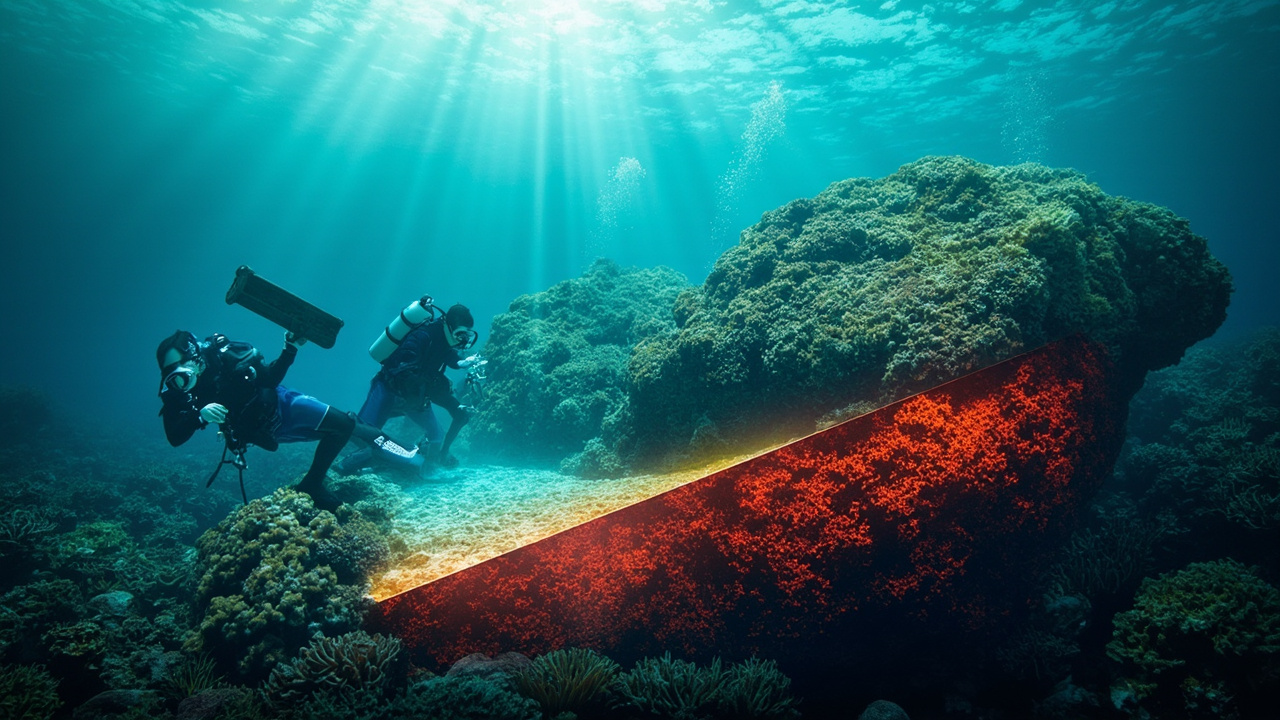
The new research, led by Julia Cole at the University of Michigan, analyzed coral skeletons from the Galápagos Islands to reconstruct eastern Pacific sea-surface temperatures across the past 1,000 years. The authors reported a large recent increase in interannual variability compared with existing paleorecords, exceeding simulated natural variability, paralleling rising global temperature and resulting from stronger El Niño events, according to the paper abstract in Science.
A 1,000-year coral thermometer in El Niño country
The team collected living and dead corals from around the Galápagos Islands in the eastern Pacific Ocean, where El Niños first develop, according to New Scientist.
The Galápagos, situated off the coast of mainland Ecuador, is right in the heart of El Niño country, where surrounding waters heat up during such an event, Cole said, as reported by The Guardian.
Researchers used uranium and thorium dating to identify the age of the corals, then analyzed the chemistry of their skeletons to track changes to sea temperatures during their lifetime, according to New Scientist.
Cole explained the method in New Scientist: the chemistry of the coral skeleton preserves a record of the environment in which it grew, and certain aspects of the chemistry are especially sensitive to temperature changes.
In that way, the team built a time series of sea-surface temperatures in the eastern Pacific spanning the past 1,000 years, according to New Scientist. El Niño and La Niña events are measured by changes to sea-surface temperatures in the Pacific, so the time series allowed the researchers to track the fluctuating El Niño–Southern Oscillation cycle through the centuries.
The corals collected by the team covered about half the 1,000-year period, according to New Scientist. Cole said she remained confident in the overall trend, telling New Scientist that the increase in variability in ENSO is tracking global temperature closely.
The study examined 13 ancient and modern corals taken from close to the events' epicenter near the Galápagos Islands, according to Live Science. The paper appeared Aug. 27 in the journal Science, Live Science reported. Cole is professor and chair of the Department of Earth and Environmental Sciences at the University of Michigan, according to Live Science.
36.5% stronger than the preindustrial baseline
The team found that, over the past 40 years, variability in the ENSO cycle increased by 36.5% compared with the preindustrial period, according to New Scientist. The analysis found that this increase was driven largely by more intense El Niño events.
The Guardian described a similar magnitude, reporting that El Niños' variability is now around 37% higher than during preindustrial times. Live Science reported that El Niño events have become nearly 40% stronger over the past four decades than they were in the preindustrial era.
While El Niños remained fairly stable for most of the long 1,000-year period, changes began around the time the world started to mass industrialize in the late 19th century, according to The Guardian. The shift became even more extreme in the past 40 years.
Cole told The Guardian: after the El Niño in 1982, the record starts showing much more variability, with conditions more extreme and unlike anything in the previous 1,000 years. She added that what surprised her was how consistent the pattern was, describing a large, distinct difference between the last 40 years and preindustrial times.
The authors also found that central Pacific coral data show increased variability, although less distinctly than in the Galápagos, according to the Science abstract. The Science editors' summary stated that the authors documented a trend toward stronger El Niño events that parallels the rise in global temperature and has produced multiple extreme El Niños over recent decades.
Cole said in a statement carried by Live Science: we don't see a time in the past where El Niños have been as strong as today, and the strength of El Niño changes in parallel with the warming of global temperature. The same statement added that the big El Niño events of the last 40 years are not normal in the context of the last thousand years.
Why models and short records missed the signal
Scientists have long struggled to untangle the effect of climate change on the El Niño–Southern Oscillation cycle, which drives El Niño events, according to New Scientist. Part of the difficulty is that detailed observational records only began in the 1980s, while a much longer timescale is needed to separate a trend from natural variability.
Climate scientists have long suspected a link between growing intensity of recent El Niño events and global warming, but sparse instrumental records and significant natural variability made certainty difficult, according to Live Science.
Using climate simulations, the researchers ruled out the possibility that natural causes, such as volcanic eruptions or solar variability, could have caused the shift, Live Science reported. The Science abstract states that the recent increase exceeds simulated natural variability.
The findings could help answer one of the more vexing questions in climate science about whether the climate crisis is significantly changing El Niño strength, according to The Guardian.
Mark Cane at Columbia University in New York, whose own work used tree-ring data to identify an increase in El Niño activity in recent years, told New Scientist that the evidence is better than 50-50 that climate change is affecting El Niño.
Samantha Stevenson-Karl, a University of California, Santa Barbara scientist and study co-author, told The Guardian that the work is a strong indication that climate change may already be amplifying El Niño events. She added that if that is true, then really large events like the one brewing in the tropical Pacific right now might become more common in the future.
A natural cycle every two to seven years — now on a warmer planet
El Niño is a naturally occurring phenomenon, taking place every two to seven years, when waters of the eastern tropical Pacific Ocean heat up and cause cascading impacts around the world, according to The Guardian.
El Niño events occur every two to seven years as part of the Pacific Ocean's El Niño–Southern Oscillation natural climate cycle, which flips between the warmer El Niño phase and the cooler La Niña phase, with neutral periods in between, according to Live Science.
El Niño periods bring elevated sea-surface temperatures in the central and eastern Pacific, thereby weakening or reversing trade winds and strongly disrupting global temperatures and rainfall patterns, Live Science reported.
The impacts of El Niño — droughts, floods and storms — are already exacerbated by rising global temperatures, because a warmer atmosphere intensifies both rainfall and droughts, according to New Scientist.
Cole told Live Science: El Niño is a really big source of climate extremes, and so if it's getting stronger, the impacts are getting stronger, including droughts, floods, wildfire and food insecurity. She also said no country has the resources to be fully protected from these impacts, calling it one more reason to move away from fossil fuels, the root cause of the problem, according to Live Science.
The Guardian reported that as the world heated due to fossil-fuel use, a string of recent super El Niño events provided extra acceleration, with intense events associated with global temperature records falling in 1998, then 2016 and then further in 2024.
Earth's last El Niño ran from June 2023 to April 2024, delivering an injection of heat to an already warming world that made 2024 the hottest year on record, according to Live Science.
The 'Godzilla' El Niño building now
The research arrives as a super El Niño is gathering strength in the Pacific Ocean and may have been made worse by climate change, according to New Scientist.
The developing El Niño, set to peak later this year, is set to be the strongest in living memory and has been informally dubbed a Godzilla event, according to The Guardian.
New Scientist reported that when the current El Niño peaks at the end of this year, sea-surface temperatures in the east-central Pacific Ocean are projected to reach 4°C above normal, a 60% increase over the old record. The research itself does not include the recent El Niños in 2015, 2023 and 2026, but Cole said they are consistent with the coral-identified trend, according to New Scientist.
Michael McPhaden at the U.S. National Oceanic and Atmospheric Administration agreed, telling New Scientist: if the current El Niño turns out to be as strong as expected, the past decade will have witnessed three major El Niños, a sequence not seen before in the instrumental record dating back to the late 19th century. He said it will add to mounting evidence that climate change is amplifying the ENSO cycle, which is concerning given ENSO's far-reaching global impacts on humans and natural systems.
Cole told The Guardian that the present event is consistent with the trend and not a fluke, describing a shift in which El Niño no longer looks like it did prior to industrial times. She called that bad news for climate hazards and for people, particularly those badly impacted yet having done little to cause climate change.
Cole told Live Science: the question is not whether the current El Niño is going to happen, but how bad it is going to be, and how bad the impacts will be. She said the event is superimposed on global warming and is likely to supercharge the temperature increase normally seen from greenhouse gases.