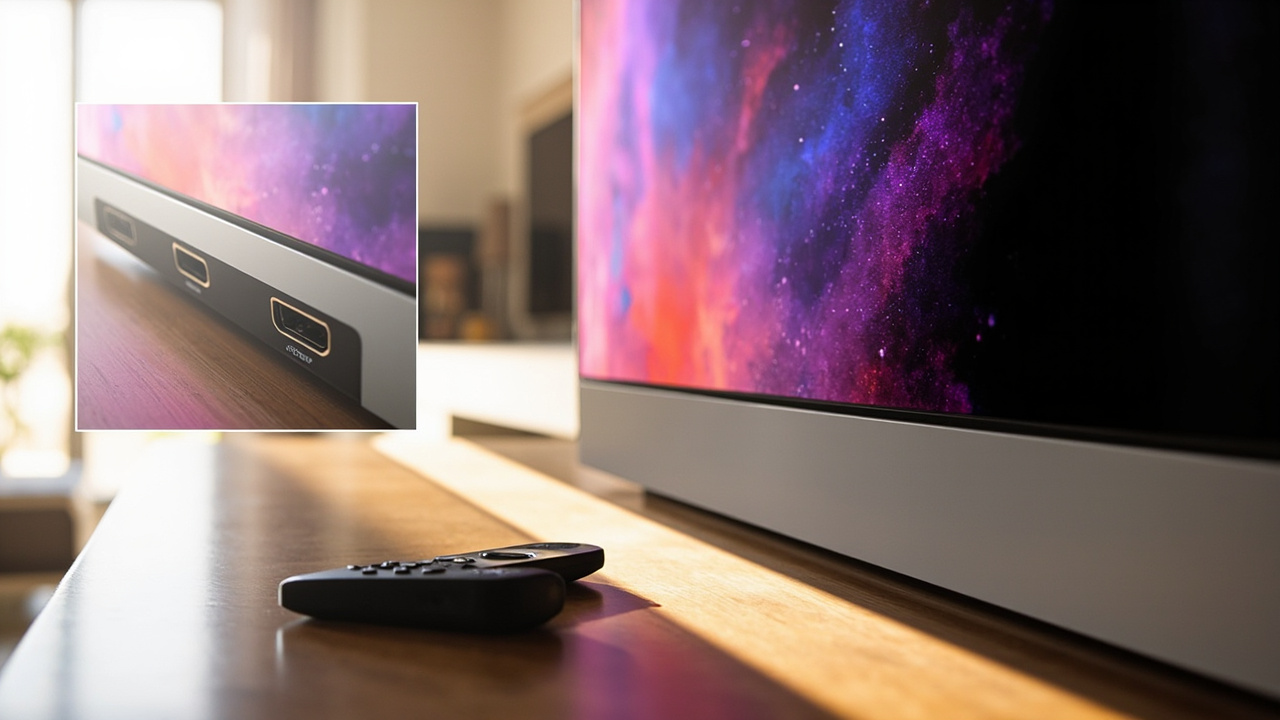
TL;DR: Sony has announced the Bravia 6, a five-size midrange OLED line priced from $1,300 to $4,000 that adds four HDMI 2.1 ports for the first time on a Sony OLED.
Sony has filled a gap at the lower end of its OLED catalog with a new value-focused model intended to go head-to-head with midrange rivals from LG and Samsung.
The company has announced the Sony Bravia 6 OLED TV, a set that sits below its other OLED televisions, the Bravia 8 and Bravia 8 II, as well as its Bravia 9 II and Bravia 7 II RGB LED televisions, according to The Verge. The announcement followed an early appearance on a wall-mounting compatibility chart on Sony's site back in June, the outlet reported.
The positioning is deliberate. The Bravia 6 is priced to compete with the LG C6 OLED and Samsung S90H QD-OLED televisions, The Verge reported, giving Sony a direct answer for shoppers who had previously found its OLED range starting at a higher tier.
What Sony announced on Aug. 27
Reporter John Higgins detailed the launch for The Verge on Aug. 27, 2026, describing the Bravia 6 as Sony's first OLED television with four HDMI 2.1 ports.
The set uses a 120Hz panel and runs on Google TV with Gemini, the company's assistant platform for voice control and recommendations. It supports Dolby Vision for high dynamic range video, plus Dolby Atmos and DTS:X for object-based audio, according to The Verge.
Sony's marketing describes the approach as "OLED essentials, now within reach," TechRadar reported on Aug. 28, 2026, signaling that the company is emphasizing core OLED strengths rather than flagship brightness or flagship audio systems.
The launch also broadens Sony's 2026 television range, which already included the Bravia 9 II and Bravia 7 II RGB LED televisions, according to Pocket-lint. That coverage, published Aug. 27, 2026, characterized the Bravia 6 as a mid-range OLED model aimed clearly at competing offerings in the OLED market.
Five sizes and five U.S. prices
The Bravia 6 comes in five sizes from 48 inches up to 83 inches, The Verge reported.
Pricing in the United States is $1,300 for the 48-inch model, $1,500 for the 55-inch model, $2,000 for the 65-inch model, $3,000 for the 77-inch model, and $4,000 for the 83-inch model, according to The Verge.
TechRadar reported the same $1,300 to $4,000 U.S. span and added Australian pricing of AU$2,599 to AU$6,999, noting that pricing for the United Kingdom was coming soon.
That structure puts the entry 48-inch Sony at essentially the same regular price as its closest LG rival. At $1,300, the 48-inch Sony Bravia 6 is priced to compete with the LG C6, which had fallen to a regular price of $1,299, while the Samsung S90H was available for $1,199 at the time of writing, TechRadar reported. The same comparison listed Australian figures of AU$2,599 for the 48-inch Sony, AU$2,399 for the LG C6 and AU$1,799 for the Samsung S90H.
Pocket-lint also noted a starting price of $1,300 and said the Bravia 6 is cheaper than Sony's higher-end Bravia 8 II QD-OLED offering.
For availability, Pocket-lint reported that the Bravia 6 was available for pre-order on Sony's website and Amazon, with a planned release date of Aug. 31. That Aug. 31 date is a planned future launch relative to the Aug. 27-28 reporting window, not a completed in-store rollout described in the launch coverage.
Why four HDMI 2.1 ports matter
The headline hardware change is connectivity for consoles, PCs and players.
The Bravia 6 will have four HDMI 2.1 inputs, according to The Verge. That makes it Sony's first OLED television with four HDMI 2.1 ports.
The practical benefit is that owners do not need to choose which device gets a full-bandwidth port. All four ports support HDMI 2.1 features sought by gamers and home-theater users, including 4K at 120Hz, Variable Refresh Rate, Auto Low Latency Mode and Dynamic HDR, Pocket-lint reported.
TechRadar reported that the four ports support 4K 120Hz and variable refresh rate, plus auto low latency mode and HDMI eARC for connection to a soundbar or audio-video receiver.
The contrast with Sony's own premium sets is striking. Unlike the higher-end Sony televisions, which only have two HDMI 2.1 ports each due to chip choices, the Bravia 6 includes four, TechRadar reported. Pocket-lint separately noted that the company's more expensive Bravia 8 II QD-OLED does not have four HDMI 2.1 ports.
Both TechRadar and Pocket-lint linked the change to silicon. TechRadar reported that the Bravia 6 includes the MediaTek Pentonic 800 chip, while Pocket-lint reported the same chip attribution via FlatPanelsHD. The Verge took a more cautious stance, writing that four HDMI 2.1 inputs could indicate the Bravia 6 uses a MediaTek Pentonic 800 system-on-chip — described as one of the requirements for Dolby Vision 2 support — but that Sony would not confirm the chip.
The competitive context may help explain the move. Considering both the LG C6 and Samsung S90H are also equipped with four HDMI 2.1 ports, Pocket-lint suggested that parity could have influenced Sony's decision.
How it compares to LG C6 and Samsung S90H
Coverage of the launch immediately framed the Bravia 6 as a three-way contest among midrange OLED options.
On operating systems, the comparison is straightforward. The Bravia 6 runs Google TV, LG uses its webOS system, and Samsung runs Tizen, TechRadar reported. The outlet noted that all three support major streaming services.
On sizes, Sony offers fewer choices. The Bravia 6 will come in five sizes — 48, 55, 65, 77 and 83 inches — while the LG C6 and Samsung S90H are both available in six sizes — 42, 48, 55, 65, 77 and 83 inches — according to TechRadar.
High dynamic range support also differs by brand. Samsung's model supports HDR10+, while the Sony and LG models support HDR10 and Dolby Vision, TechRadar reported. All three models support Dolby Atmos audio, but the Sony additionally supports DTS:X, according to the same comparison.
Gaming features show a split in certification. For gamers, the Sony supports variable refresh rate based on the standard HDMI 2.1 specification; the LG supports HDMI-specification variable refresh rate plus Nvidia G-Sync and AMD FreeSync Premium; and the Samsung supports HDMI-specification variable refresh rate, G-Sync and FreeSync Premium Pro, TechRadar reported.
Refresh-rate ceilings are another dividing line. All three televisions support at least 120Hz 4K, but the Sony only supports 120Hz at 4K, while the LG and Samsung both support 4K 165Hz maximum, TechRadar reported.
That 165Hz figure matters for PC gamers who connect a capable computer, even though broadcast television, streaming services and current consoles do not routinely use rates above 120Hz. For buyers who plan to use the television mainly for movies and current game consoles, the practical difference centers on input flexibility and processing rather than the maximum PC refresh rate.
The panel question: WOLED and OLED SE reports
Pocket-lint reported that the Bravia 6 features a WOLED panel, a technology associated with vivid colors, sharp contrast and deep black levels.
TechRadar went further into the supply-chain discussion, writing that multiple outlets have reported that the Bravia 6 uses a newer, more affordable OLED SE panel, which is also used in the LG B6. The outlet cautioned that it did not have official confirmation.
The panel type matters because brightness and color volume can vary even when prices look similar. If the Sony does use the same panel as the B6, the LG C6 and Samsung S90H would have an advantage in brightness and color reproduction of the panel itself, TechRadar reported. The outlet added that it admired the performance of the LG C6 and that its first impressions of the Samsung S90H were that its display came very close to the C6, with a full review still to come at the time.
There are reasons not to draw a firm conclusion from refresh rate alone. TechRadar noted that the OLED SE panel is capable of reaching 144Hz, so the fact that Sony is limited to 120Hz does not confirm anything about its panel either way.
Sony's image processing remains a separate variable. TV enthusiasts will be interested in Sony's processing rather than just the panel, TechRadar reported, pointing to the company's reputation for motion handling and upscaling and for picture accuracy. The same analysis cautioned that this approach often produces a dimmer-looking picture than competitors even when using the same panel, and that Sony might be starting with a dimmer panel in this case.
Price pressure adds another wrinkle. The 48-inch version of the LG B6 was available for $799 at the time of writing, TechRadar reported, well below the $1,300 starting price of the 48-inch Sony. If the two televisions share panel hardware — a point not officially confirmed — the difference would place greater weight on Sony's processing, audio support, operating system and four-port HDMI layout as justifications for the higher figure.
Remote, voice and software
Beyond picture and ports, Sony changed the in-hand controls.
In comparison to Sony's premium OLED televisions, the Bravia 6 comes with a redesigned remote, The Verge reported. Its streaming-service buttons are at the top instead of the bottom, there is a larger, more centralized directional pad surrounded by the home, settings and back buttons, and volume and channel toggles sit toward the lower third.
The remote includes a built-in microphone for Gemini control, according to The Verge. That matches the television's broader software approach: like all of Sony's televisions, the Bravia 6 also runs Google TV, with support for Gemini, Pocket-lint reported.
Taken together, the package suggests Sony is trying to lower the entry price for its OLED picture without removing features that influence everyday use — full-bandwidth HDMI ports on every input, established HDR and audio formats, and hands-free voice through the remote.
Sources referenced
- Sony finally has a cheaper OLED to compete with midrange Samsung and LG TVs | The Verge (https://www.theverge.com/tech/985363/sony-releases-cheaper-bravia-6-oled-tv)
- How does Sony's new Bravia 6 OLED TV compare to the LG C6 and Samsung S90H? Here's what we know | TechRadar (https://www.techradar.com/televisions/how-does-sonys-new-bravia-6-oled-tv-compare-to-the-lg-c6-and-samsung-s90h-heres-what-we-know)