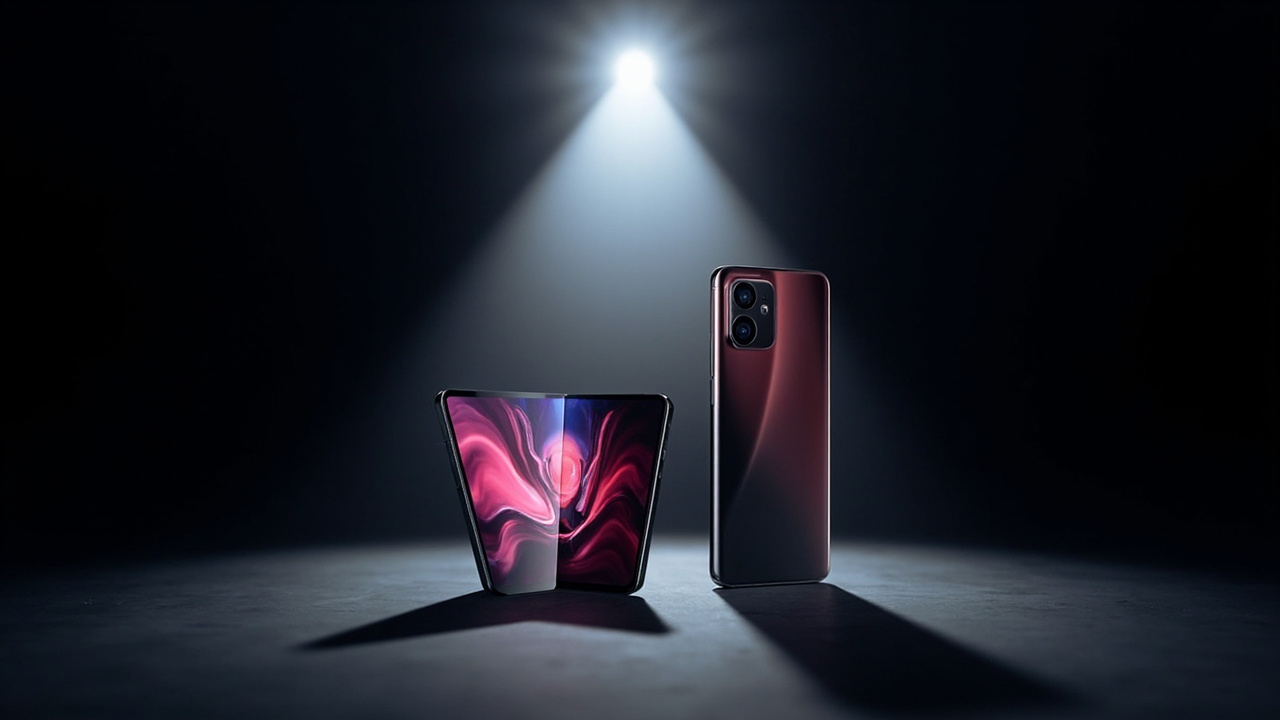
TL;DR: Apple introduced its first foldable iPhone Duo and the iPhone 18 Pro line at its September 9 “Surprise and shine” event, with Pro preorders starting September 12 and Duo preorders starting October 16.
Apple completed its biggest fall phone announcement in years on September 9, 2026, revealing the foldable iPhone Duo alongside the iPhone 18 Pro and iPhone 18 Pro Max at the Steve Jobs Theater in Cupertino, California. According to Reuters in “Five takeaways from Apple’s biggest product showcase of the year,” the showcase was the first major launch event with John Ternus as chief executive and centered on foldable hardware, higher-priced Pro phones, on-device artificial intelligence, watches, and entry-level AirPods with noise cancellation.
The launch split Apple’s phone lineup by timing. According to The Verge in “Apple’s iPhone 18 Pro has a dynamic aperture main camera,” preorders for iPhone 18 Pro and iPhone 18 Pro Max began September 12 ahead of availability September 18. According to Reuters, preorders for iPhone Duo begin October 16 and the device goes on sale October 23. According to The Verge in “Apple skips the base iPhone 18 at its fall launch event,” the base iPhone 18 was not shown at the September event.
Foldable iPhone Duo leads the lineup
iPhone Duo is Apple’s first foldable smartphone. According to Reuters, Duo marked the biggest redesign of the iPhone line in years with a passport-shaped design that opens into a 7.6-inch display and includes a 5.4-inch outer screen. The large display allows users to keep two apps open at the same time.
According to The Verge in “Apple iPhone Duo launch event: The 5 biggest announcements,” Duo lays flat when opened and is Apple’s “thinnest iPhone yet” when open. The device maintains the same aspect ratio across both displays. Changes to iOS 27 make it possible to view two apps side by side, pin videos, and use the device in “any orientation.” The Verge reported that Netflix, Zoom, and Slack had already launched updates to take advantage of Duo features.
Apple positioned Duo as a pocketable large-screen device. According to Reuters, Apple said Duo is the thinnest iPhone when open. The Verge reported that Duo supports Apple Pencil later this year and uses Touch ID integrated into the side button.
Duo displays, chip, modem, and battery
Duo uses a 7.6-inch inner display and a 5.4-inch outer screen. According to The Verge, the display has a nanotexture finish that reduces glare and reflections. The hardware includes Apple’s A20 Pro chip, the company’s in-house C2 cellular modem, and a 48-megapixel camera.
According to Reuters, the A20 Pro chip is built on a 2-nanometer process. Apple said the chip, paired with a vapor-chamber cooling system, is designed to improve on-device AI performance, graphics processing, and battery efficiency. Duo also includes Apple’s latest C2 modem.
Battery life depends on which display is used. According to The Verge, iPhone Duo offers two batteries with up to 31 hours of video playback when using the inner display and up to 44 hours when using the outer display.
Duo starts at $1,999 and comes in star white and night sky. According to Reuters, pricing starts at $1,999, about $100 more than Samsung’s Galaxy Z Fold8 and Google’s Pixel 11 Pro Fold at comparable base storage levels. Duo offers up to 2 terabytes of storage, a capacity not available on the rival foldable models described by Reuters.
iPhone 18 Pro and Pro Max get variable aperture
Apple also announced iPhone 18 Pro and iPhone 18 Pro Max with a new main-camera system. According to Reuters, both models feature a new 48-megapixel main camera with a variable aperture system that automatically adjusts to lighting conditions and allows users greater control over depth of field and low-light photography.
According to The Verge, Apple described the update as its “biggest camera improvement in years.” The 48-megapixel variable-aperture main camera uses six blades described as thinner than a human hair, with a new sensor. In darker environments, the aperture opens to let in more light, making Night mode captures faster with better quality. Video adds 4K time-lapse recording in Dolby Vision HDR.
The phones add expanded manual controls. According to The Verge, “Pro controls” give users more manual control over the camera for photos and videos, including changing shutter speed to adjust motion blur. Photographic Styles add texture and grain control. Apple will support Google’s SynthID content-authenticity protocol and a new “Apple Reference Image” standard that cryptographically signs images at capture, creating an unalterable digital negative.
According to Reuters, Apple Reference Image and SynthID support will not be available in the European Union or China.
A20 Pro performance and connectivity
Both Pro models use Apple’s new A20 Pro chip. According to The Verge, the A20 Pro has a new architecture built on 2nm technology, like Apple’s M6 chip. It has a 6-core CPU with two desktop-class performance cores and four efficiency cores. It also has a 7-core GPU design that enables a 40 percent increase in performance, according to Sribalan Santhanam, vice president of Apple silicon engineering. Apple added a second neural engine for a total of 32 NPU cores.
Thermal hardware was revised for sustained performance. According to The Verge, iPhone 18 Pro has a next-generation vapor chamber with three times the surface area of the chamber in the iPhone 17 Pro. Rich Dinh, vice president of hardware engineering, said iPhone 18 Pro has all-day battery life comparable to iPhone 17 Pro Max.
Battery and charging figures rose for the Pro line. According to The Verge, video playback is 36 hours for iPhone 18 Pro and 45 hours for iPhone 18 Pro Max. Apple said 15 minutes of wired charging provides 50 percent charge for iPhone 18 Pro, while five minutes of wired charging provides seven hours of video playback for iPhone 18 Pro Max.
Connectivity moves to Apple’s own modem. According to The Verge, the iPhone 18 Pro line is Apple’s first set of phones with a new C2 cellular modem, which supports mmWave 5G and delivers faster uploads compared with C1X while consuming 15 percent less energy.
Prices, storage, colors, and dates
The Pro line costs more than the prior Pro entry points. According to Reuters, Apple gave its Pro models a $100 price increase, with iPhone 18 Pro and iPhone 18 Pro Max starting at $1,199 and $1,299. Reuters linked the increases to a surge in memory-chip costs.
According to The Verge, iPhone 18 Pro starts at $1,199 for 256GB, a $100 increase over iPhone 17 Pro, while iPhone 18 Pro Max starts at $1,299 for 256GB. Both models are offered in 256GB, 512GB, 1TB, and 2TB configurations. The Pro Max adds a new 2TB option.
Colors are black, silver, glacier, and burgundy, with color-matched back glass. According to The Verge in “Apple’s new phones are here,” published September 13, 2026, the Pro update is a refinement year with a variable-aperture main lens, better battery, a new chip, and new colors including black.
A smaller Dynamic Island can now show three Live Activities at once. Accessories include a revised clear case.
Base iPhone 18 absent, older iPhones cost more
Apple did not announce a base iPhone 18 at the fall event. According to The Verge, Apple focused on higher-priced iPhone models, and the base model was a no-show after rumors that Apple would launch only premium iPhones in the fall with the base model slipping to the following spring.
At the same time, Apple raised prices on existing models still on sale. According to The Verge in “Apple is raising iPhone prices by $100 on all of its old models,” the iPhone 16 rose from $699 to $799. The iPhone 17E with 256GB rose from $599 to $699. The iPhone 17 with 256GB rose from $799 to $899. The iPhone Air rose from $999 to $1,099. The base iPhone 18 was missing from the September event, while the highest-end models start at $1,199.
Apple Intelligence, Siri AI, and privacy
Ternus framed privacy as Apple’s differentiator in the AI period. According to Reuters, he pitched the iPhone as an “intelligent personal hub” that ran AI services on-device whenever possible, with Siri playing a key role. Cloud-based processing is used only when additional computing power is required, with protections extended through Private Cloud Compute.
According to Reuters, Siri AI will work with more than 300,000 apps at launch and can perform actions across Apple and third-party applications. According to The Verge, the phones are equipped to work with Apple Intelligence and Siri AI, including more expressive Siri AI voices.
Apple’s iOS 27 update was scheduled to arrive September 14 with Siri AI as a beta for devices set to English. According to The Verge, the more conversational assistant can take action across apps. iOS 27 also includes a way to adjust the opacity of Liquid Glass, new icon designs, extra-large widgets, and new volume settings for ringtones, alarms, timers, and alerts.
Watches and AirPods round out the event
The company launched Apple Watch Series 12 and Apple Watch Ultra 4 with a redesigned health-sensing system and new S11 chip. According to Reuters, Series 12 starts at $399, while Ultra 4 starts at $799. New features include a Readiness score, more frequent heart-rate monitoring, health insights powered by Apple Intelligence, and audio-intelligence tools including Live Rewind and Siri Recap.
According to The Verge, Siri Recap uses built-in microphones on Watch Series 12 and Watch Ultra 4 to take notes on daily conversations. Users can ask Siri questions about transcripts and save them to the Siri app. Audio Intelligence uses on-device AI to detect sounds including sirens or a doorbell.
Health sensing increased in frequency. According to The Verge, Watch Series 12 measures heart rate every five seconds using larger, more power-efficient green LEDs and samples heart-rate variability as often as every five minutes. The redesigned Health app includes personalized guidance and a Longevity tab covering sleep, movement, heart health, and other metrics. Series 12 offers up to 24 hours of battery life, while Ultra can last over two days. Series 12 starts at $399 or $899 for a ceramic option, while Ultra 4 starts at $799, with availability starting September 18.
Apple also launched a new generation of AirPods starting at $129, bringing active noise cancellation to entry-level earbuds for the first time. According to Reuters, a $149 version adds wireless charging and on-stem volume controls for adjusting volume by swiping up or down. According to The Verge, AirPods 5 are more durable and offer 50 percent more noise reduction than the previous generation. The $129 model offers up to four hours of listening with noise cancellation on, or up to 20 hours with the charging case. The $149 model offers up to five hours with noise cancellation and includes a wireless charging case. Both models were set for availability starting September 18.
Sources referenced
- Five takeaways from Apple’s biggest product showcase of the year | Reuters (https://www.reuters.com/technology/foldable-iphone-pricier-18-pro-unveiled-apples-first-event-under-ternus-2026-09-09/)
- Apple iPhone Duo launch event: The 5 biggest announcements | The Verge (https://www.theverge.com/tech/991965/apple-iphone-duo-launch-event-biggest-announcements)